Wetland pilot near Viborg, Denmark
2026-09-01
The MISO consortium has implemented the wetland pilot near Viborg, Denmark, to test the performance of the autonomous sensors for flux measurements under realistic ecosystem conditions.
Read more
MISO develops an autonomous observation system for monitoring of emissions of CO2 and Methane, the two most important greenhouse gases. The system is modular and is suited for use in hard-to-reach areas such as the Arctic or wetlands.
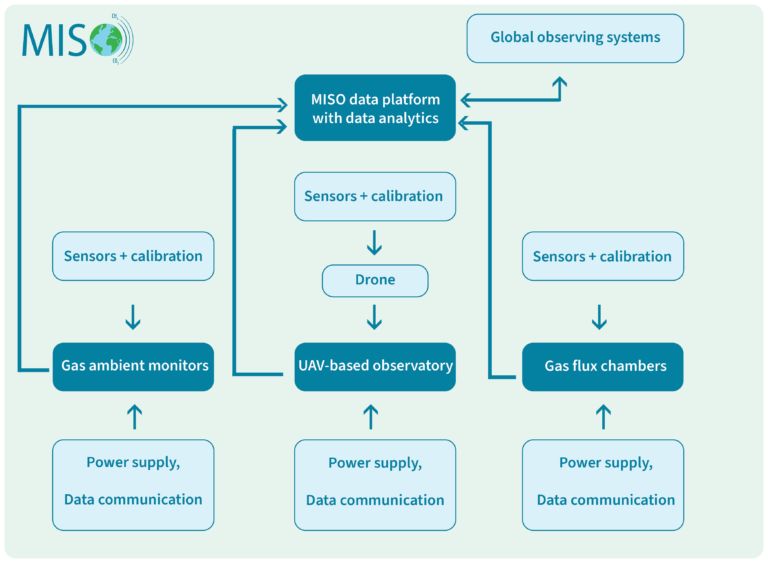
MISO develops an autonomous observation system for monitoring of emissions of CO2 and Methane, the two most important greenhouse gases. The system is modular and is suited for use in hard-to-reach areas such as the Arctic or wetlands. It combines three observing platforms (a static tower-Gas ambient monitor , a static gas flux chamber and a UAV-based observatory using NDIR sensing technologies ) with a cloud platform. The system can be operated remotely , with minimum on-site intervention.
The MISO team has expanded existing technologies: we have improved detection limit and accuracy of an NDIR GHG sensor integrated in the platforms. The static platforms and the drone base are powered by a unique geothermal device. The communication between the three observing platforms and a data cloud uses a combination of Peer2Peer, G4/G5/LTE, LORAWAN and wifi technologies.
2026-09-01
The MISO consortium has implemented the wetland pilot near Viborg, Denmark, to test the performance of the autonomous sensors for flux measurements under realistic ecosystem conditions.
Read more
2026-08-03
During the summer of 2026, scientists at AWI and Aarhus University have been processing and analyzing the autochamber data from the MISO Pilot in Denmark, releasing the first results for 3-week-period flux measurements.
Read more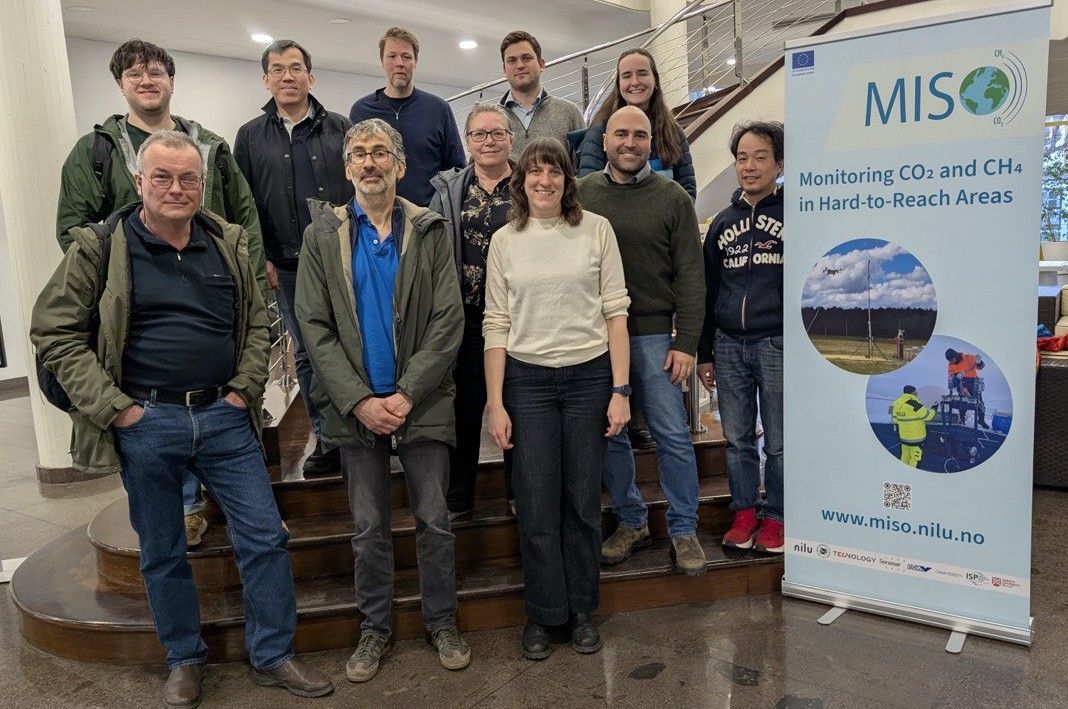
2026-07-06
MISO is officially finished (last day was 30.06.2026). In a 3.5-year journey the project has developed and demonstrated an autonomous in-situ observation platform for hard-to-reach areas.
Read more