
The Horizon Europe ???? ??????? is dedicated to improving GHG (Greenhouse Gas) in-situ datasets in hard-to-reach areas such as the Arctic and Wetlands. Accurate and fine-scale GHG monitoring is crucial for tracking global warming, informing GHG emission policies, and supporting climate decision-making.
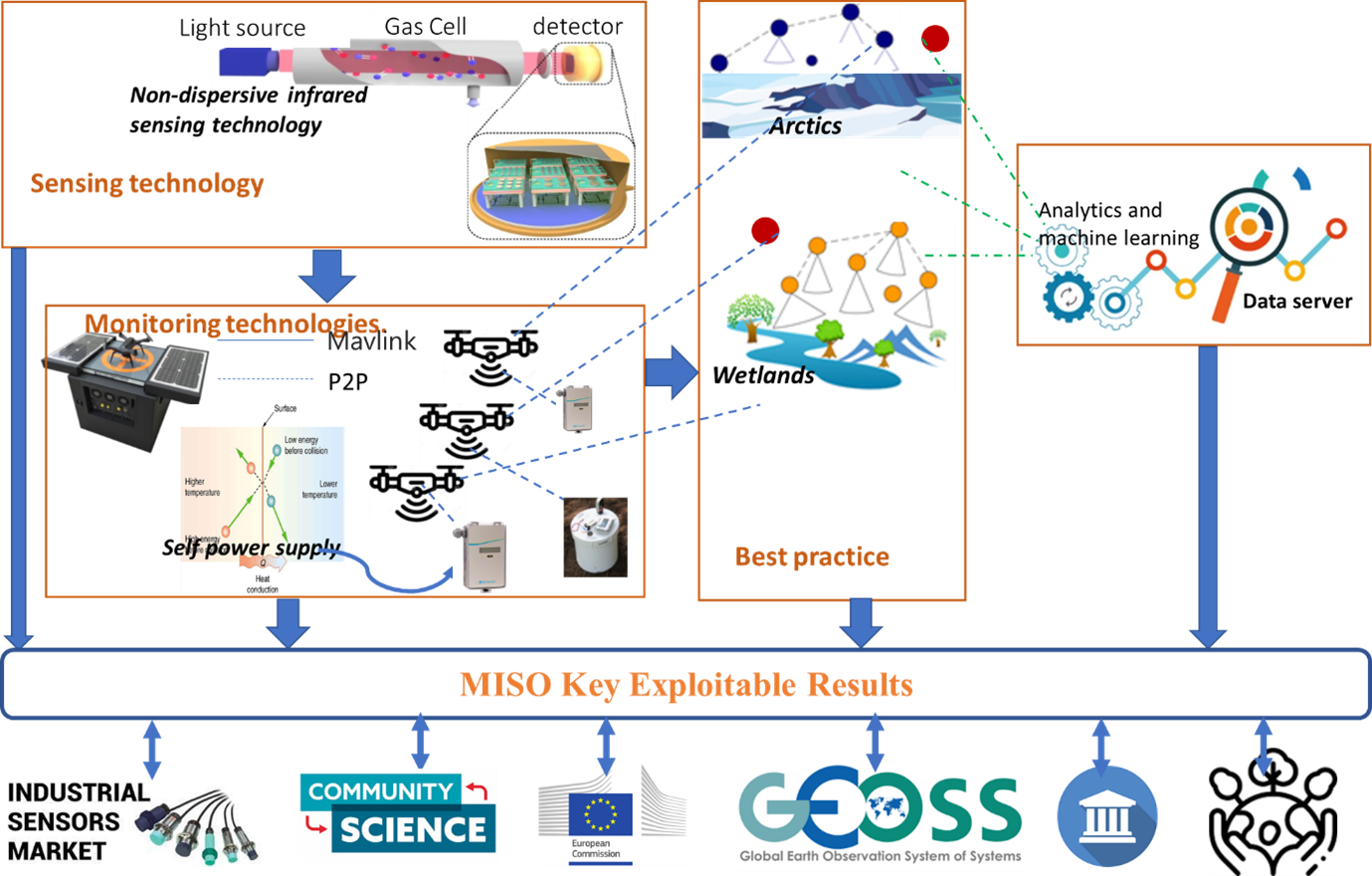
MISO aims to enable the effective use, deployment, and exploitation of in-situ observatories, making accessible and exploitable data available to support ICOS and GEO initiatives with in-situ measurement components. Our stakeholder engagement strategy is structured to maximize impact across multiple sectors:
? ?????????? ???????? (e.g., Senseair, Norsk Elektro Optikk AS) – Engaging in discussions on the technical specifications of sensing modules to improve measurement accuracy.
? ??????? ??????? & ???????? ??????????? (e.g., ICOS, COINS, EO SIS GWOS, where MISO partners NILU, AWI & UiT- The Arctic University of Norway play key advisory roles) – Addressing GHG measurement requirements in Arctic and Wetland regions, discussing three types of measurement specifications, gap-filling strategies, and data acquisition protocols.
? ???????????? & ?????????? ?? ?????? – Exploring how ground-based GHG observations are essential for understanding climate change impacts in extreme environments and how these datasets contribute to National and European Green Deal objectives.
Through these efforts, MISO is helping to shape the future of climate action, with in-situ data supporting science-based policies and sustainable solutions.







Contact Info
Dr. Tuan-Vu Cao, project coordinator.
The Climate and Environmental Research Institute NILU.

This project has received funding from the European Union’s Horizon Europe research and innovation programme under Grant Agreement No. 101086541.