









MISO Intelligent Framework
This product is an Integrated software and hardware framework that transforms static sensors into an intelligent, dynamic, and sustainable sensing network, ready for deployment in hard-to-reach areas without existing communication infrastructure or power supply.
Benefits:
- a significant reduction in power consumption without compromising model accuracy, enabling the sensing network to operate autonomously for a long period in hard-to-reach areas.
- ensuring sensing data remains accurate over the entire lifespan of the device without interrupting its operation
- autonomously update and manage an entire network of sensors spread across hard-to-reach areas such as the Arctic, or wetlands, where human servicing would be difficult.
Characteristics:
The systems capabilities are built on three main pillars:
Efficient On-Device AI
Instead of using generic, power-hungry AI models, our framework automatically optimizes AI models for the user’s sensor hardware (e.g, STM32 micro-controllers) and applications (e.g., sensor calibration) using the Neural Architecture Search (NAS) technology. This optimization utilizes our latency and/or energy models created for the hardware to find an optimal AI model for the application. This innovation results in a significant reduction in power consumption without compromising model accuracy, enabling the sensing network to operate autonomously for a long period in hard-to-reach areas.
Zero-Downtime Live Updates
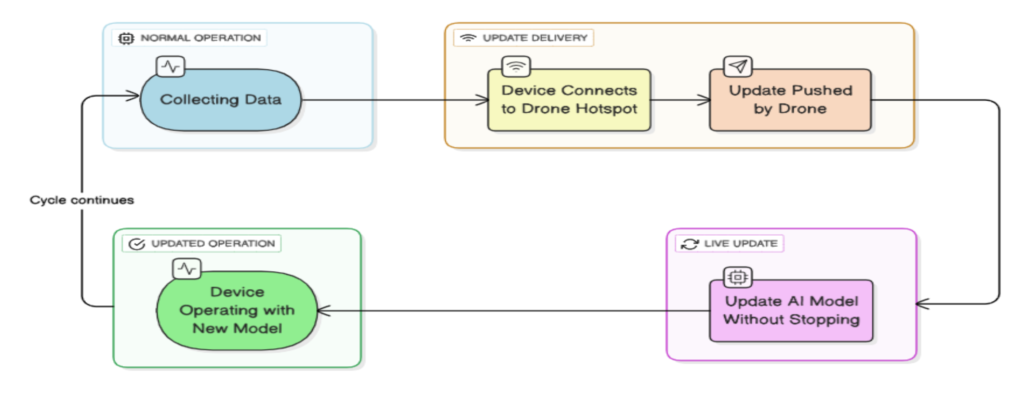
Sensor devices in hard-to-reach areas can receive updates to their calibration models while continuing their sensing operations, without needing to shut down the device, apply the update, and reboot. With this live update solution, sensor devices will not experience downtime due to maintenance: the sensor is never offline. Calibration for critical sensors (e.g., greenhouse gasses sensors) can be updated live to correct for drift, different ambient temperatures, or other environmental changes, ensuring sensing data remains accurate over the entire lifespan of the device without interrupting its operation.
Automated Over-the-Air Servicing
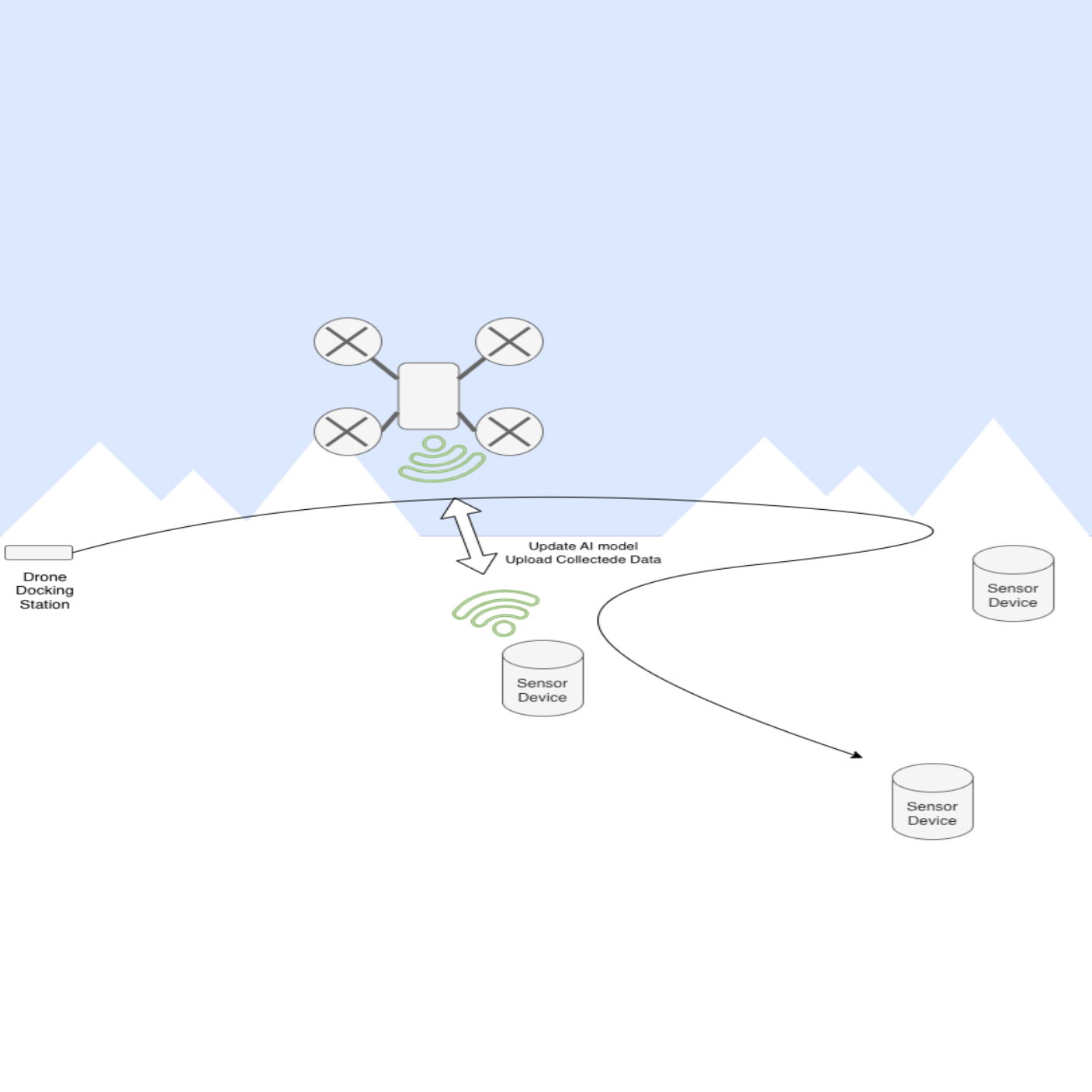
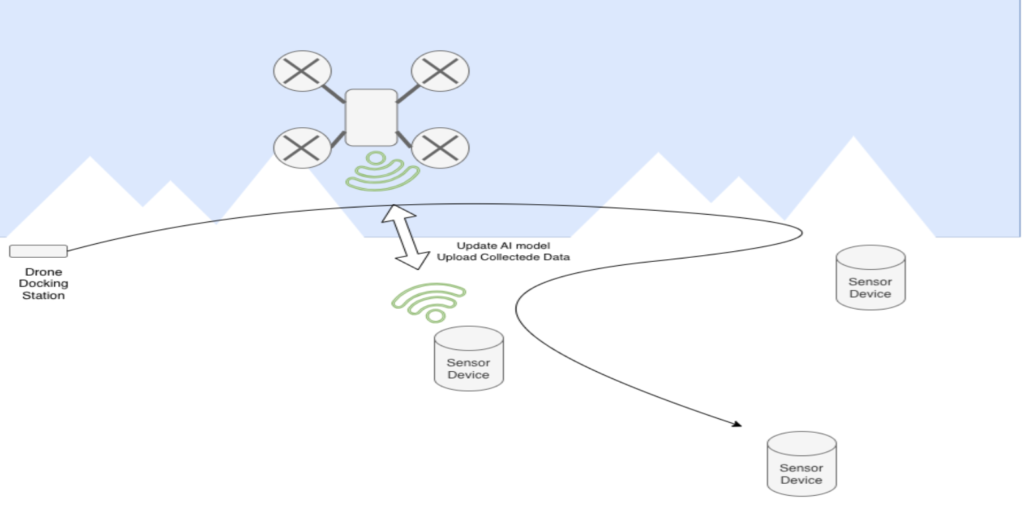
The framework’s communication layer is designed for automated data transfer from sensor devices to intermediaries such as drones, to the cloud, using both WiFi and LoRa communication technologies. A drone can fly over a deployment site, establish a connection with the sensor device, download the collected data, as well as deliver an update to the device’s AI model. This capability eliminates the need for often difficult manual servicing in hard-to-reach areas. A single drone can autonomously update and manage an entire network of sensors spread across hard-to-reach areas such as the Arctic, or wetlands, where human servicing would be difficult.
Contact Info
Dr. Tuan-Vu Cao, project coordinator.
The Climate and Environmental Research Institute NILU.

This project has received funding from the European Union’s Horizon Europe research and innovation programme under Grant Agreement No. 101086541.