This is the
MISO project
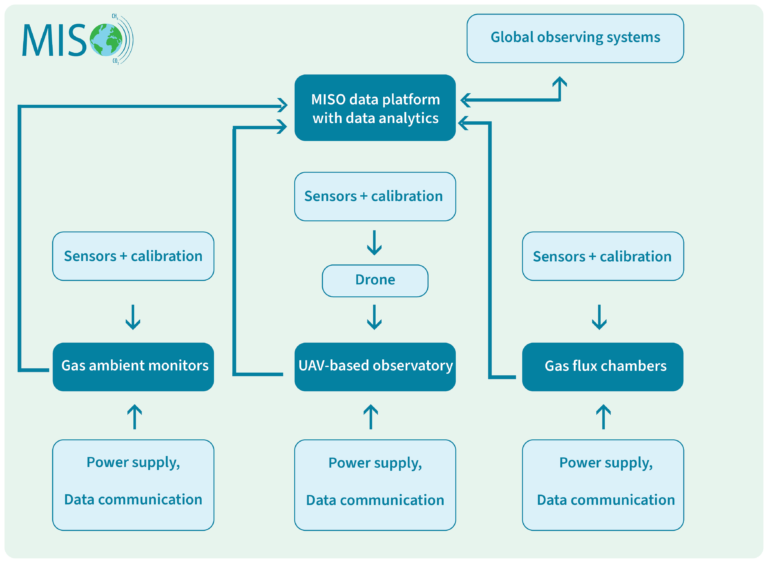
MISO develops an autonomous observation system for monitoring of emissions of CO2 and Methane, the two most important greenhouse gases. The system is modular and is suited for use in hard-to-reach areas such as the Arctic or wetlands. It combines three observing platforms (a static tower-Gas ambient monitor , a static gas flux chamber and a UAV-based observatory using NDIR sensing technologies ) with a cloud platform. The system can be operated remotely , with minimum on-site intervention.
The MISO team has expanded existing technologies: we have improved detection limit and accuracy of an NDIR GHG sensor integrated in the platforms. The static platforms and the drone base are powered by a unique geothermal device. The communication between the three observing platforms and a data cloud uses a combination of Peer2Peer, G4/G5/LTE, LORAWAN and wifi technologies.
To ensure consistent measurements, the observing platforms are optimized for energy efficient autonomous operation. This includes on-platform detection of faults through an optimized Machine Learning calibration. The cloud platform stores model updates and fault detection information together with the raw measurements.
The system is co-developed with stakeholders from academia, monitoring and measurement systems, industry and policy. It is thoroughly documented and has been demonstrated in the Arctic and in Wetland .
NEWS

? MISO at EG26 – from sensor integration to field deployment ?
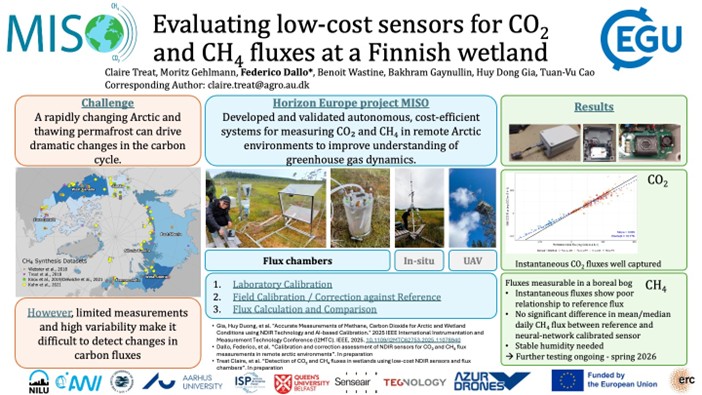
EGU26 provided an important opportunity to present ongoing work from the MISO project as it approaches its final phase, highlighting the scientific and technological progress achieved through strong collaboration across the consortium. During the conference, our colleague Federico Dallo (ISP-CNR) presented the team’s work on integrating the K96 NDIR sensor
MISO featured in Teknisk Ukeblad
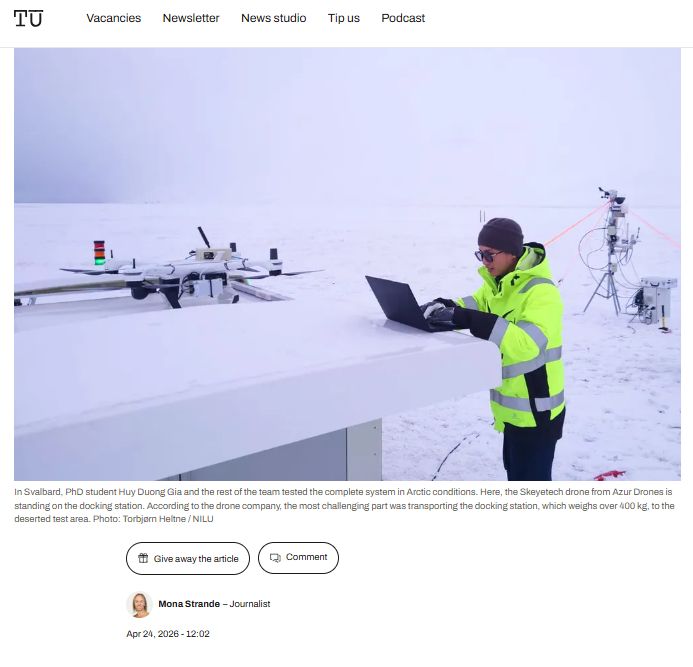
MISO is now on Teknisk Ukeblad (TU) -the biggest Norwegian engineering magazine. The EU project MISO led by NILU has developed new solutions for monitoring local emissions of greenhouse gases in hard-to-reach areas. MISO consortium has been working for over three and half years to develop a solution that allows
MISO Showcases Innovative GHG Monitoring Approaches at EGU26
Join us at hashtag#EGU26: If you are attending EGU26 this year, either in Vienna or online, we would like to invite you to: 1, Session BG2.10, Tue, 5 May, 08:30–10:15 | PICO spot 2 (https://lnkd.in/ejbRTjrA) -Approaches to measuring, processing and understanding the exchange of gases in soils and ecosystems where

Contact Info
Dr. Tuan-Vu Cao, project coordinator.
The Climate and Environmental Research Institute NILU.

This project has received funding from the European Union’s Horizon Europe research and innovation programme under Grant Agreement No. 101086541.